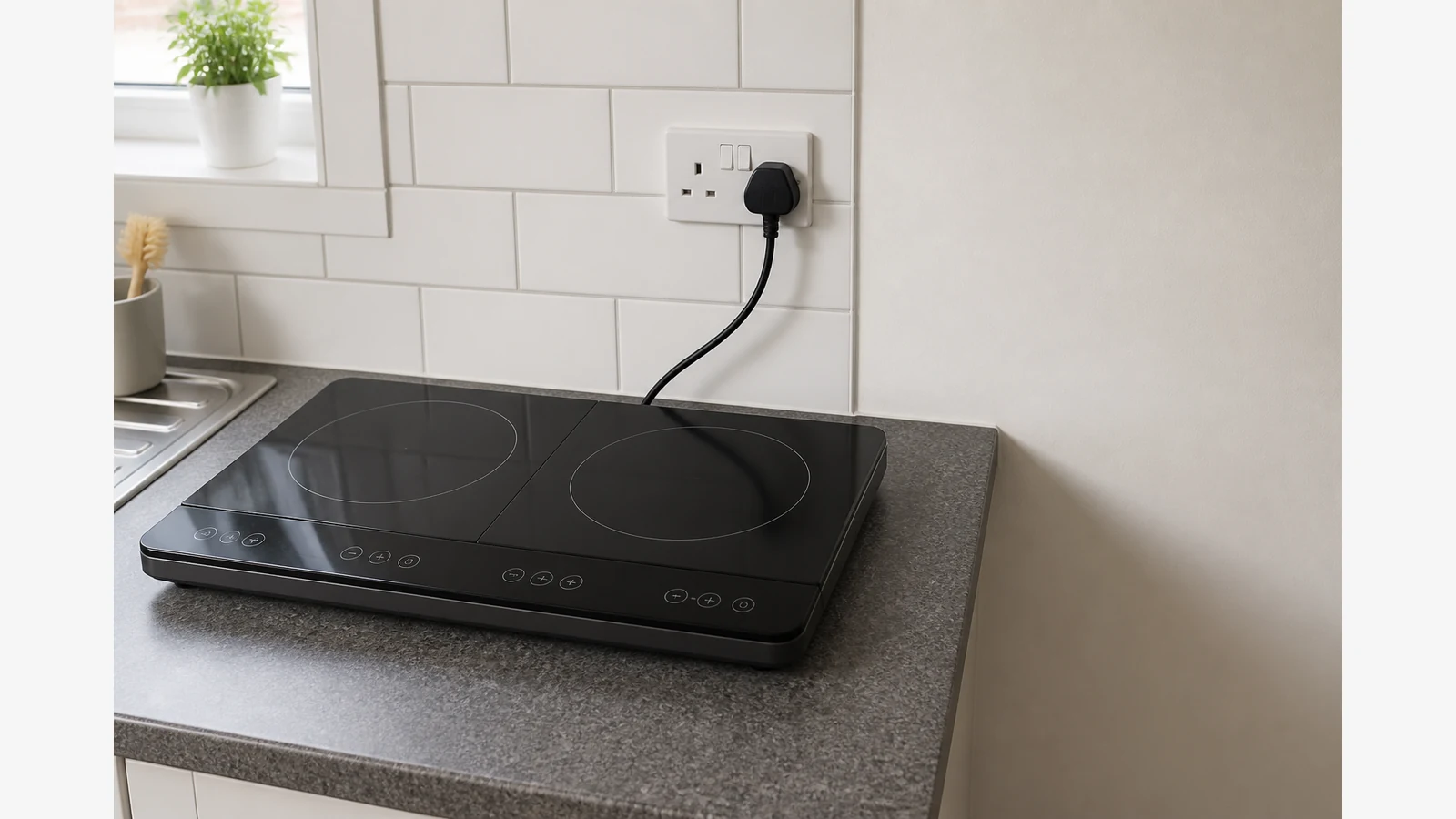
Can I Plug Induction Hob Into Normal Socket Uk
Direct answer: You can only plug an induction hob into a normal UK 13A socket if it is sold as a plug-in model with a factory-fitted UK three-pin plug and a total rating engineered around the ~2.8–3 kW continuous limit of a standard socket. Built-in multi-kilowatt induction hobs that expect a 32A or 40A cooker circuit must be hardwired by a qualified electrician — never rewired onto a 13A plug as a DIY shortcut.
What a UK 13A socket can actually carry
A standard UK socket outlet is fused at 13A. At 230 V that is roughly 3 kW continuous. Guides aimed at UK buyers note that sockets support about 3 kW, and induction appliances above that class need a dedicated cooker circuit rather than a wall socket — see Appliance House’s UK plug-in versus hardwire power guide.
That limit is why boiling a kettle while a microwave and a high-draw hob share the same ring often trips the breaker: the combined load, not the hob alone, is what fails.
Plug-in exceptions versus hardwired hobs
Most domestic induction hobs are designed for hardwiring on a dedicated cooker circuit. Manufacturer and retailer explainers in the UK commonly state that plug-in exceptions are engineered at or below about 3 kW with a fitted 13A UK plug, while typical built-in units expect 32A or 40A supplies — summarised in Cata Appliances’ guidance on plugging induction into a normal socket.
For dual-zone plug-in models, total power is often shared across both zones rather than delivering two full “boost” loads at once. A companion UK guide notes that 13A plug-in induction is typically capped near 2.8 kW shared across zones, and advises against sharing that socket with other high-draw appliances — see Cata’s 13A plug-in induction pros and cons.
Decision path for renters and temporary kitchens
- Confirm the hob ships with a factory UK three-pin plug — not a bare cable or continental plug.
- Check the rated total wattage sits within normal socket limits and that dual zones use power sharing.
- Give the hob its own dedicated wall socket; do not run it through a thin extension lead or share with a kettle.
- Check your tenancy or landlord rules before adding portable appliances.
- If you need simultaneous high-power boost on every zone like a built-in cooker, a plug-in portable is the wrong product class.
Who should not buy a plug-in hob
Skip the plug-in route if you expect built-in 6–7 kW simultaneous performance, plan to hardwire into a cooker switch yourself, or need every zone at maximum for long restaurant-style service. Those needs belong on a dedicated circuit installed by a competent person.
Next step
If you specifically need a portable double zone that plugs into a normal socket for a flat, studio, or kitchen-refit stopgap, review the live product details on the VBGK double induction hob page, then plan meals around one dedicated socket and sensible zone power sharing. For studio-sized layouts, continue with our guide to a portable induction hob for UK studio flats.